
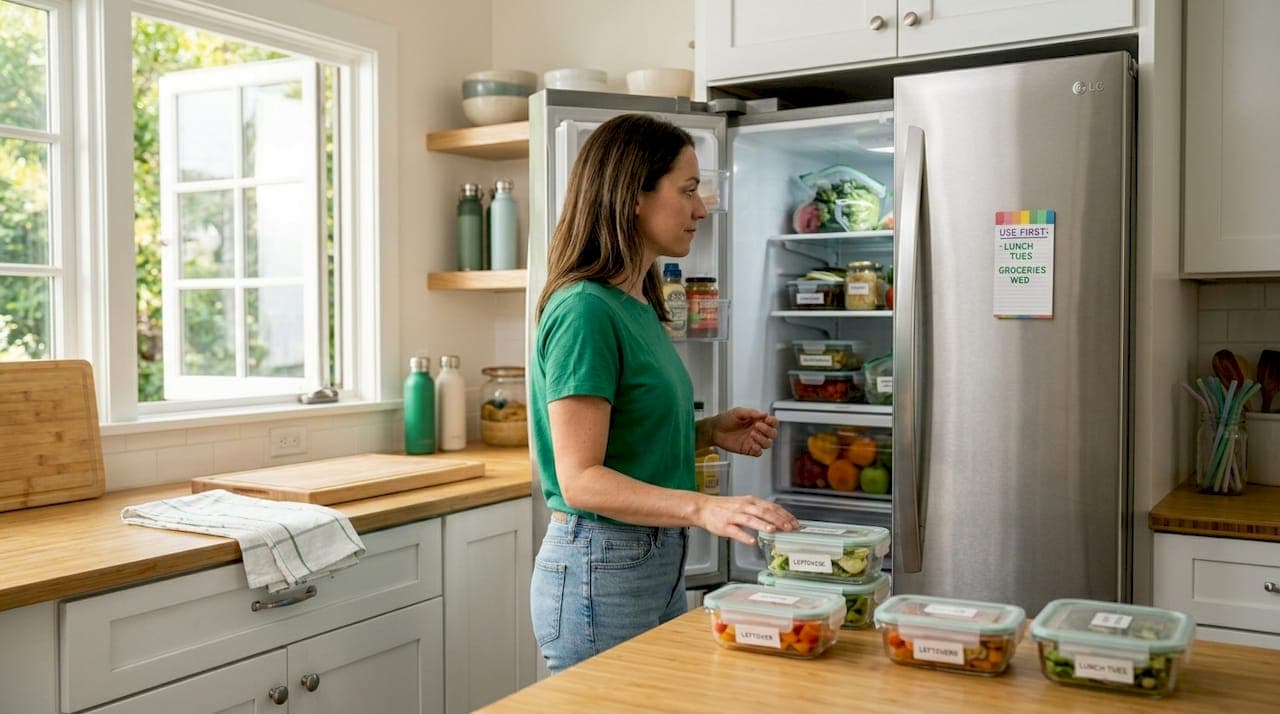
Most households throw away roughly 30 to 40 percent of the food they buy, and the culprit is almost never bad intentions. It's a disorganized fridge, a vague plan, and the daily question "what's for dinner?" answered with a takeout order instead of the chicken thighs going soft on the second shelf. A budget meal rotation from fridge contents is one of the most underused tools in household money management. This guide walks you through exactly how to set it up, execute it week after week, and handle leftovers safely so nothing goes to waste and your grocery bill actually shrinks.
Table of Contents
- Understanding the daily challenges of budget meal rotation from fridge
- Preparing your kitchen and fridge for effective meal rotation
- Executing a budget meal rotation using your fridge inventory
- Verifying food safety and maximizing leftover usability
- Why a simple fridge-based meal rotation beats complex meal plans
- Make fridge meal rotation effortless with Spoilless
- Frequently asked questions
Key Takeaways
| Point | Details |
|---|---|
| Reduce food waste | Using a fridge-based meal rotation helps you use leftovers first and avoid throwing away spoiled food. |
| Save money | Planning meals around what you already have cuts grocery bills by minimizing unnecessary purchases. |
| Safe leftover handling | Cool leftovers quickly and store them properly to keep food safe to eat for 3-4 days. |
| Simple meal rotation | Rotate a few versatile meals using core proteins, starches, and vegetables for less stress and variety. |
| Flexible and practical | A fridge-first rotation adapts easily to changing schedules and reduces decision fatigue. |
Understanding the daily challenges of budget meal rotation from fridge
Decision fatigue is real, and it costs money. When you open the fridge at 6 p.m. with no plan, you either order delivery or grab random ingredients that don't add up to a meal. Either way, something in the fridge gets pushed to the back and forgotten. A 5-day rotation of familiar dinners reduces decision fatigue and impulse buys, which directly protects your grocery budget.
The deeper problem is that most people shop first and plan second. They see a sale on pork tenderloin, buy it, and then forget they already have ground beef and a half-used bag of lentils at home. That overlap creates a fridge full of competing ingredients, none of which form a complete meal without yet another grocery run. Fridge meal planning flips the sequence: you look at what you have, then you decide what to cook.
Here's what typically goes wrong in unmanaged fridges:
- Leftovers get buried behind fresh groceries and expire before anyone eats them
- Proteins get forgotten because they're not visible at eye level
- Produce wilts because it was bought without a specific meal in mind
- Impulse buys crowd out the items already there, creating redundancy and waste
- No "use first" system means older items always lose to newer ones
Planning meal schedules around your actual fridge inventory, rather than around a Pinterest board, is the single biggest shift that separates households that waste food from those that don't.
Preparing your kitchen and fridge for effective meal rotation
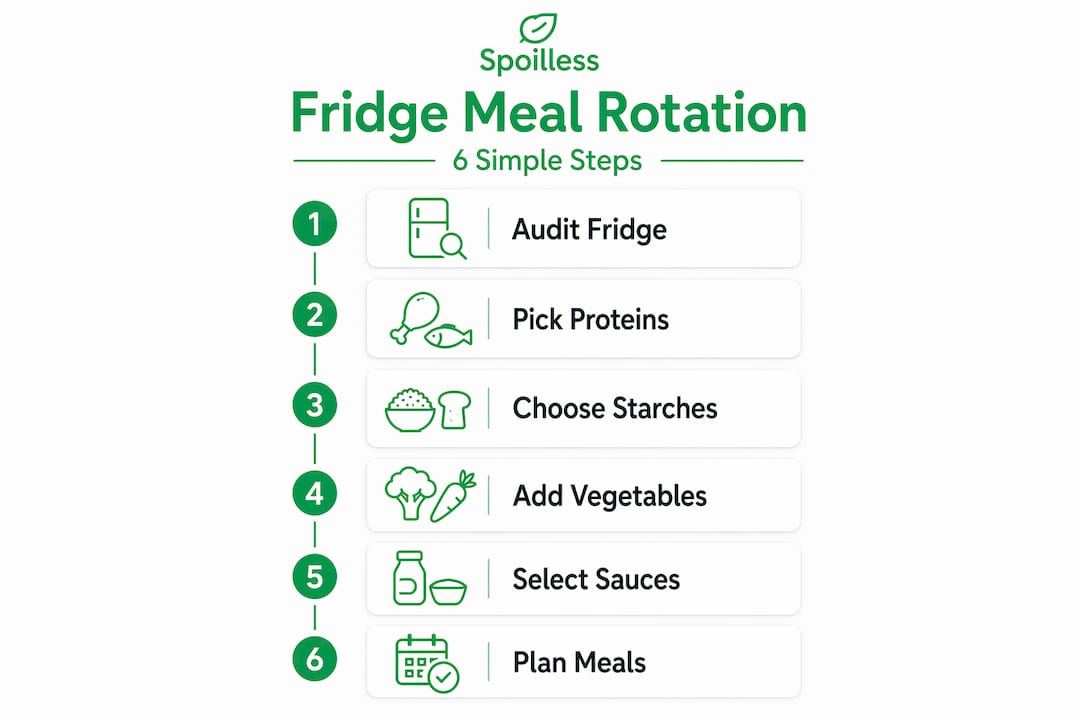
Before you can rotate meals intelligently, your fridge needs a basic structure. Think of it as three zones. The "Use First" zone sits at eye level and holds anything with fewer than three days of life: opened leftovers, wilting greens, proteins that have been thawing, and any cooked items from earlier in the week. The Fresh Ingredients zone goes on the lower shelves and holds newer produce, raw proteins, and dairy. The Condiments and Staples zone lives in the door and on the top shelf where temperature fluctuates most.
This zone system sounds simple because it is. The power is in consistency. When everyone in the household knows that the top shelf is where you look first before cooking, the rotation happens automatically without anyone having to think about it.
Leftover storage matters just as much as placement. Cooked leftovers must be refrigerated within 2 hours and stay safe for 3 to 4 days when stored below 40°F. Use shallow containers rather than deep ones so food cools faster and more evenly. Label every container with the date it was made, not the date it expires. That one-second habit saves you from the "is this still good?" guessing game.
Pro Tip: Designate one night per week as "Use It Up" dinner night. Whatever is in the Use First zone becomes the meal. This single habit can eliminate the majority of fridge waste in most households within two weeks.
| Storage method | Safe duration | Best container type |
|---|---|---|
| Cooked proteins (refrigerated) | 3 to 4 days | Shallow airtight container |
| Cooked grains and pasta | 3 to 5 days | Sealed glass or plastic container |
| Cooked vegetables | 3 to 4 days | Shallow container, loosely covered |
| Raw proteins (refrigerated) | 1 to 2 days | Original packaging or sealed bag |
| Soups and stews | 3 to 4 days | Airtight container, labeled with date |
With your fridge properly organized and safe storage practices in place, you're ready to execute a meal rotation plan using your existing ingredients.
Executing a budget meal rotation using your fridge inventory
The framework that works for real budgets is straightforward: planning meals around existing inventory first, then supplementing with sales, saves significant money every week. Here's how to build that rotation step by step.
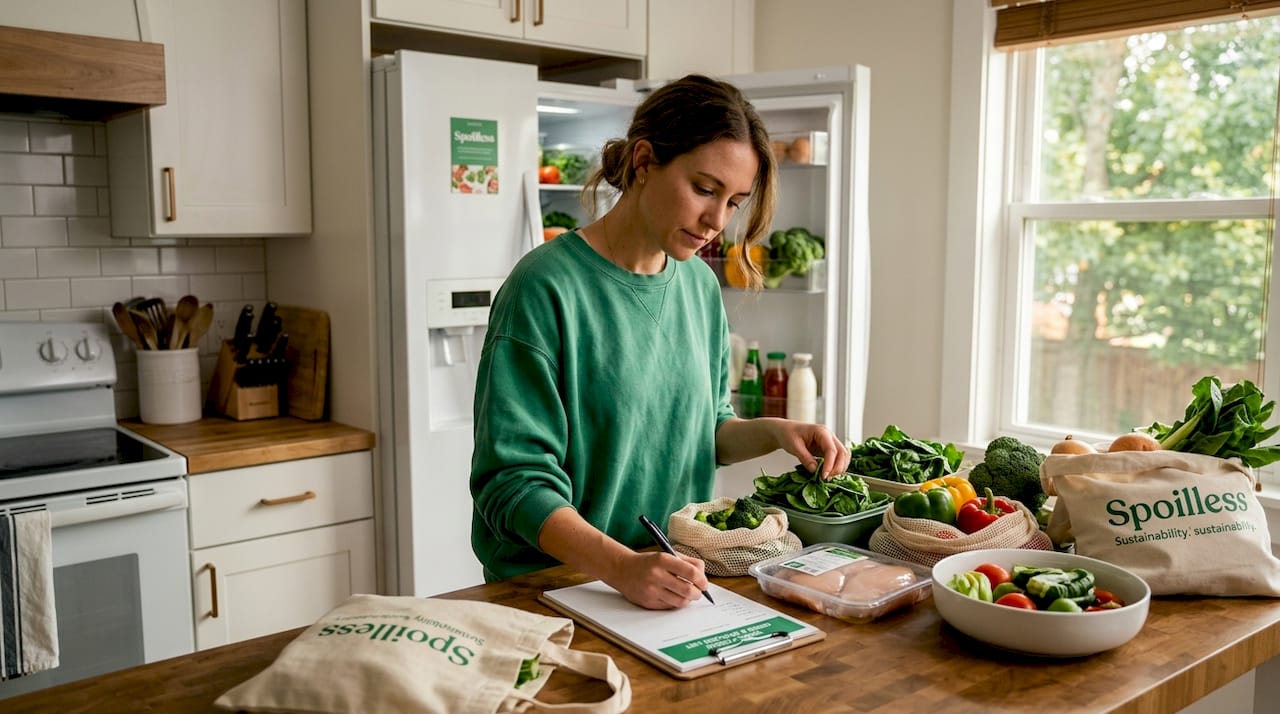
Step 1: Audit your fridge and freezer. Pull out every protein, every vegetable, and every leftover. Group them visually. What you see is your meal budget for the week.
Step 2: Identify your two proteins. Proteins are your most expensive items, so they anchor the rotation. Maybe it's a pack of chicken thighs and a pound of ground beef. Everything else builds around them.
Step 3: Choose two starches. Rice, pasta, potatoes, and tortillas are cheap, filling, and endlessly flexible. Pick two that pair with your proteins.
Step 4: Pick two to three vegetables. Use whatever is in the Use First zone first. Frozen vegetables are a legitimate backup and often more nutritious than fresh produce that's been sitting for a week.
Step 5: Select two sauces or seasoning profiles. This is where variety comes from without buying new ingredients. The same chicken thighs taste completely different with a soy-ginger glaze versus a tomato-based sauce. A frugal weekly rotation of 2 proteins, 2 starches, and 2-3 vegetables can feed a family for $40 to $80 per week.
Step 6: Map meals to days. Put the most perishable items on days one and two. Save heartier items like root vegetables and frozen proteins for later in the week.
Here's how the same core ingredients can produce varied meals:
| Base ingredient | Meal 1 | Meal 2 |
|---|---|---|
| Ground beef | Taco bowls with rice | Pasta with meat sauce |
| Chicken thighs | Sheet-pan chicken with roasted vegetables | Chicken fried rice with leftover rice |
| Canned beans | Bean and vegetable soup | Bean quesadillas with cheese |
| Potatoes | Roasted potato wedges | Potato hash with eggs |
One recipe worth keeping in your rotation is this budget-friendly taco pasta, which runs about $1.44 per serving and uses pantry staples most households already have. It's the kind of meal that makes a pound of ground beef feel like a feast.
Pro Tip: Buy proteins on sale and freeze them immediately. Then thaw one or two per week based on your rotation plan. This alone can cut your protein spending by 20 to 30 percent over a month.
When you're building your cheap meal rotation, keep planning meal schedules tied to what's already in the house rather than what sounds good in the moment. That discipline is where the real savings accumulate.
Verifying food safety and maximizing leftover usability
Safe leftover handling is not optional. It's the part of fridge meal planning that determines whether your rotation saves money or makes someone sick. The rules are simple but non-negotiable.
- Cool food quickly. Cooling leftovers in shallow containers and refrigerating within 2 hours prevents bacterial growth in the temperature danger zone (40°F to 140°F)
- Label with the cook date. Not the eat-by date. The cook date. Then you always know exactly how old something is
- Use within 3 to 4 days. Cooling leftovers to room temperature before refrigerating extends safe use to 3 to 4 days for most cooked foods
- Reheat to 165°F. Use a food thermometer. Steaming hot is not the same as 165°F
- Only reheat what you'll eat. Pulling the whole container out and reheating it repeatedly degrades food quality and increases bacterial risk
- Keep your fridge at or below 40°F. A cheap refrigerator thermometer costs about $8 and removes all guesswork
"The biggest mistake people make with leftovers is not the storage itself, it's the reheating. Partial reheating, or reheating the same batch multiple times, is where foodborne illness risk actually spikes."
Pro Tip: Invest in a set of uniform, stackable containers in two or three sizes. When your storage system is consistent, you can see exactly what's in the fridge at a glance, and you're far more likely to actually use the leftovers you've stored.
Why a simple fridge-based meal rotation beats complex meal plans
Here's the uncomfortable truth about elaborate meal plans: most of them fail by Wednesday. Life changes. A meeting runs late, a kid gets sick, or you're just too tired to make the thing you planned three days ago. When your plan is rigid, any deviation feels like failure, and failure leads to abandonment.
A fridge-first rotation doesn't have that problem. Because it's built around what you actually have rather than a fixed recipe list, it bends without breaking. If you planned chicken stir-fry but the broccoli went soft, you pivot to chicken soup with whatever vegetables are still good. The rotation continues. Nothing gets wasted.
The financial argument is equally strong. A 5-day rotation of familiar dinners limits impulse purchases and adapts to changing schedules, which means your grocery spending becomes predictable rather than reactive. Predictable spending is the foundation of any real household budget.
There's also a psychological benefit that rarely gets discussed. When you know your fridge has a system, you stop dreading the question of what to cook. The Use First zone tells you where to start. The rotation tells you what to make. The decision is already half made before you open the door. That mental relief is worth more than most people realize, especially in households where meal planning has historically been a source of daily friction.
The goal of planning meal schedules this way isn't perfection. It's consistency. A system you use imperfectly every week beats a perfect plan you abandon by Thursday.
Make fridge meal rotation effortless with Spoilless
Knowing the system is one thing. Maintaining it when life gets busy is another. That's exactly what Spoilless is built for.
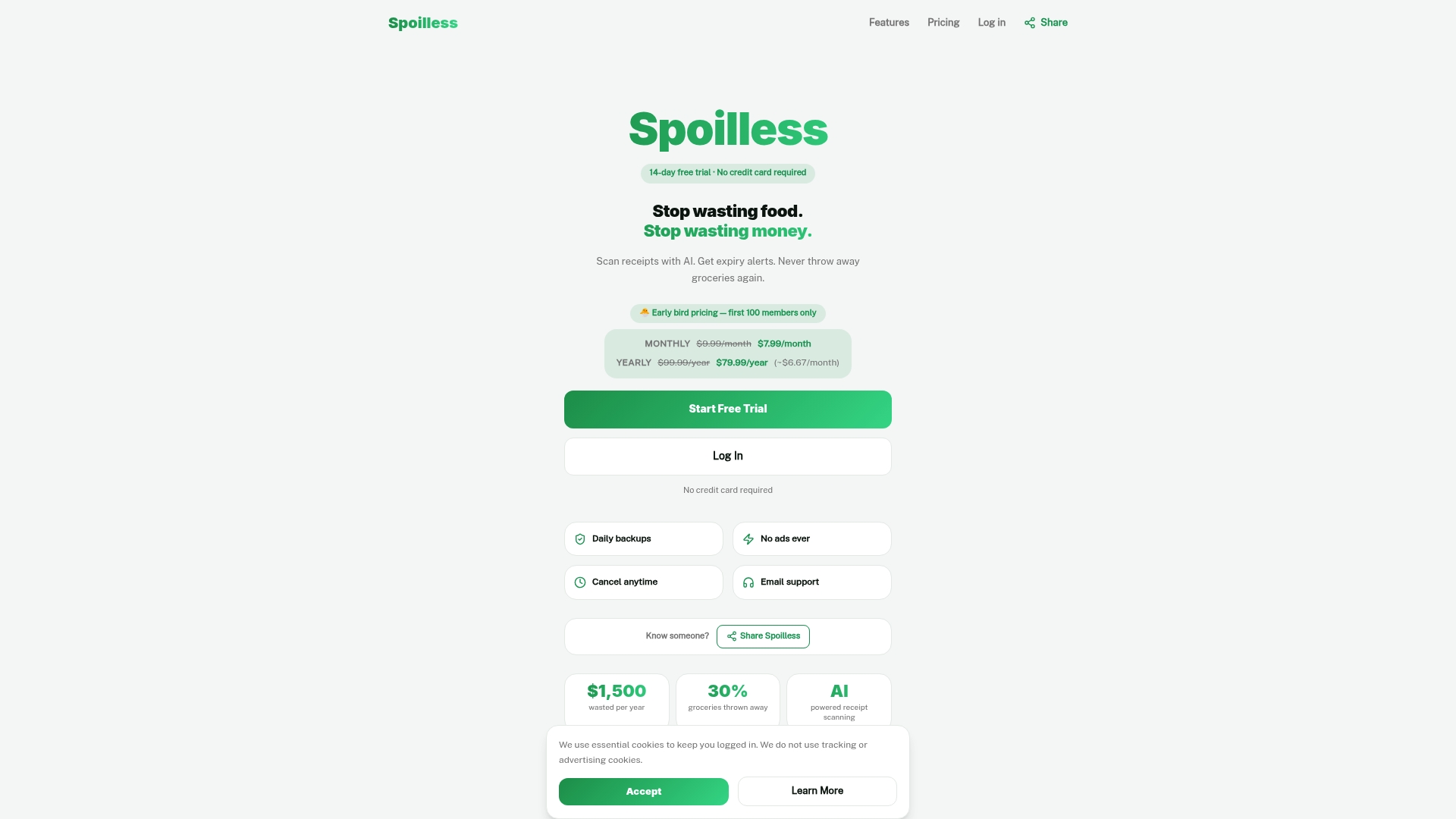
Spoilless uses AI-powered receipt scanning to automatically update your virtual pantry every time you shop, so you always know what's in your fridge without manually tracking anything. It sends expiry alerts before food goes bad and suggests meals based on what's closest to expiring, which is the core logic of a fridge-first rotation, done automatically. For families managing tight budgets and packed schedules, it turns a good idea into a daily habit without the mental overhead. Explore meal schedules and fridge management with Spoilless and see how much easier this system becomes when the tracking happens for you.
Frequently asked questions
How long can leftovers stay safe in the fridge?
Cooked leftovers remain safe for 3 to 4 days when stored in a refrigerator at or below 40°F in a properly sealed container.
What is the best way to cool leftovers before refrigeration?
Spread food into shallow containers and let it cool to room temperature before refrigerating. Cooling in shallow containers speeds the process and reduces bacterial risk, and cooling to room temperature before refrigerating keeps food safe for up to 3 to 4 days.
How can I save money by using meal rotation from my fridge?
Start every week by auditing your fridge proteins and perishables, build meals around those first, and fill gaps with pantry staples or sale items. Planning around existing inventory consistently saves significant money compared to shopping without a plan.
What meals work well for a budget-friendly fridge meal rotation?
Simple combinations like chili, sheet-pan chicken, rice bowls, and one-pot pasta rotate well and stay affordable. A core set of proteins, starches, and vegetables can feed a family for $40 to $80 per week, and meals like beef taco pasta cost as little as $1.44 per serving.