
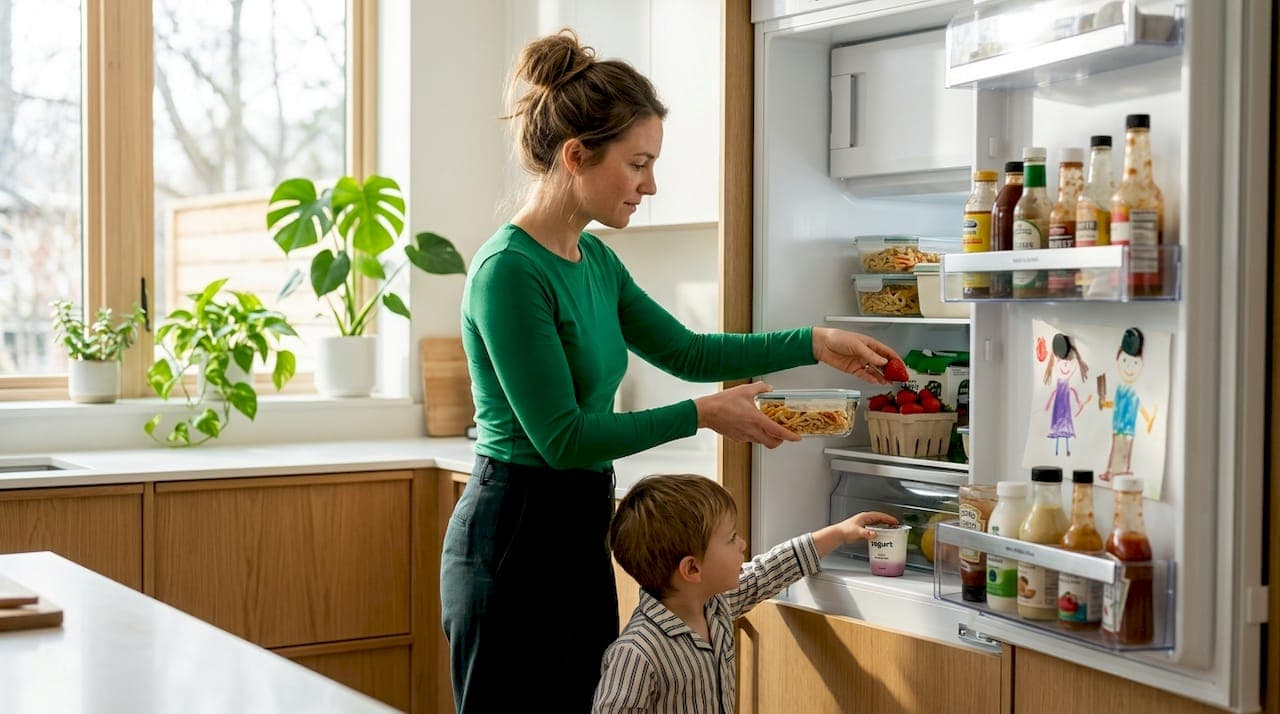
The average American family of four wastes nearly $3,000 per year on uneaten food, and most of that loss doesn't happen at the grocery store or the dinner table. It happens silently, in the back of an overstuffed, poorly arranged refrigerator. Understanding how fridge organization reduces food loss is one of the highest-return habits a household can build. It costs almost nothing to start, takes less than an hour to implement, and pays dividends every single week in saved money, less guilt, and a noticeably lighter trash can.
Table of Contents
- Why food waste happens in the refrigerator
- Core principles of effective fridge organization
- Detailed fridge zone setup and item grouping
- Implementing and maintaining your fridge organization system
- Benefits of organizing your fridge beyond reducing food waste
- A fresh take: why mindset and routine matter more than gadgets
- Get started today with Spoilless fridge organization solutions
- Frequently asked questions
Key Takeaways
| Point | Details |
|---|---|
| Food waste cost | American families waste hundreds to thousands yearly due to forgotten or improperly stored fridge items. |
| FIFO method | Placing older items first reduces waste by up to 40% by ensuring timely use before expiration. |
| Zone storage | Organizing by temperature zones and humidity settings extends food freshness by 2–5 days. |
| Weekly maintenance | Spending 5 minutes per week rotating items and checking expiry prevents slow waste buildup. |
| Beyond waste reduction | Organized fridges save money, ease meal prep, conserve energy, and promote eco-friendly habits. |
Why food waste happens in the refrigerator
Most people assume they waste food because they overbuy. That's only half the story. The other half is that food bought with good intentions disappears into a disorganized fridge and never comes back out until it's too late. Most of that waste lives in the back corners of disorganized fridges, hidden behind newer groceries and forgotten until they've gone bad.
The root causes are predictable once you know what to look for:
- Poor visibility. When food is stacked randomly, older items get buried. Out of sight means out of mind, and out of mind means in the trash.
- Wrong temperature placement. Milk stored in the door sits in the warmest zone of the fridge, spoiling days faster than it would on a middle shelf. Eggs suffer the same fate.
- Humidity mismatches. Most crisper drawers have adjustable humidity sliders that almost nobody uses correctly. Leafy greens stored in a low-humidity drawer wilt in two days instead of seven.
- Overloading. A packed fridge blocks airflow. Cold air can't circulate, warm spots form, and food in those spots spoils faster regardless of what it is.
Good fridge organization methods attack every one of these causes at once. The fix isn't buying a bigger fridge. It's using the one you have with intention.
Core principles of effective fridge organization
Knowing why food spoils is useful. Knowing exactly what to do about it is better. These four principles form the foundation of any effective fridge organization system, and they work whether your fridge is a compact apartment model or a large family unit.
- FIFO rotation. FIFO stands for First In, First Out. Every time you restock, older items move to the front and new items go behind them. It sounds obvious, but almost nobody does it consistently. FIFO reduces food waste by up to 40% when applied to every shelf, not just one.
- Temperature zoning. Your fridge has distinct temperature zones, and matching food to the right zone extends freshness significantly. Keeping your fridge at 40°F or below slows bacterial growth, and organizing by zone extends freshness by 2 to 5 days per item.
- Humidity control. Use the high-humidity crisper for leafy greens, herbs, and carrots. Use the low-humidity crisper for fruits, peppers, and mushrooms. This single adjustment alone can double the lifespan of your produce.
- Date labeling. Write the date on every container before it goes into the fridge. This takes five seconds and eliminates the guessing game that leads to perfectly good food being thrown away.
"A fridge without a system is just an expensive box that hides food until it rots. A fridge with a system is the single most powerful tool in your kitchen for saving money and reducing waste."
Pro Tip: Set a weekly calendar reminder for Sunday evening to do a quick fridge scan. Move anything expiring soon to eye level so it becomes the first thing you reach for when cooking.
These effective fridge organization strategies don't require expensive products or a kitchen renovation. They require about ten minutes of attention per week once the initial setup is done.
Detailed fridge zone setup and item grouping
Building on those principles, here's how to physically arrange your fridge so the system works automatically, even on your busiest days.
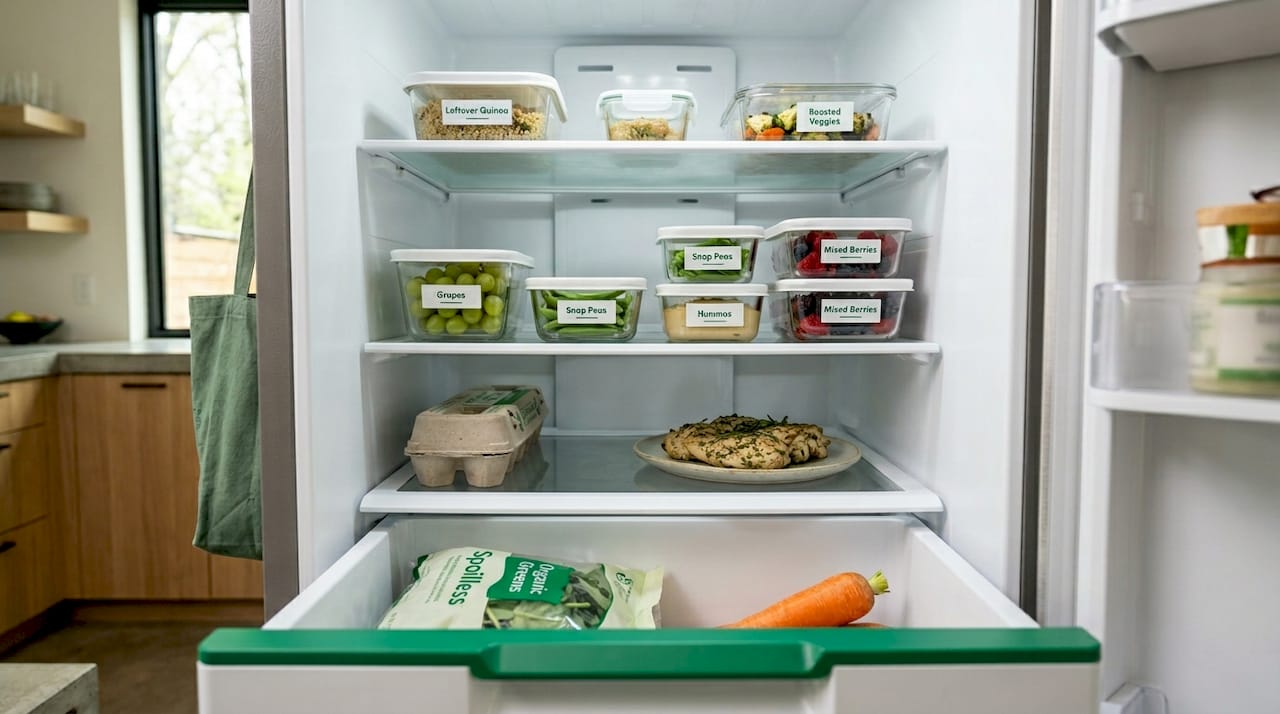
Zone breakdown:
| Fridge zone | Temperature | What goes there |
|---|---|---|
| Bottom shelf | Coldest | Raw meat, poultry, fish |
| Middle shelf | Consistent cold | Dairy, leftovers, meal prep |
| Top shelf | Slightly warmer | Ready-to-eat foods, drinks |
| Door | Warmest | Condiments, juice, butter |
| High-humidity crisper | Humid | Leafy greens, herbs, carrots |
| Low-humidity crisper | Drier | Fruits, peppers, mushrooms |
Raw meat on the bottom shelf isn't just about temperature. It also prevents drips from contaminating ready-to-eat food below. This is basic food safety, but it doubles as smart organization.
Here's how to set up each zone effectively:
- Use clear bins to group similar items: one for dairy, one for snacks, one for condiments overflow, one for meal prep containers. Grouping items in clear bins reduces the "I forgot that was in there" problem by making every item visible at a glance.
- Never store milk or eggs in the door. The door is the warmest part of the fridge and experiences the most temperature fluctuation every time it opens. Wilt-prone vegetables belong in the high-humidity drawer; rot-prone produce goes in the low-humidity side.
- Leave breathing room. Aim for roughly 50% capacity on each shelf. A fridge that's too full blocks airflow and creates uneven cooling zones.
- Label everything. Masking tape and a marker cost less than a dollar. Write the item name and the date it was stored or opened. This makes FIFO rotation effortless.
Pro Tip: Buy one set of uniform, stackable clear containers for leftovers. Mismatched containers waste vertical space and make it harder to see what's inside. Uniform containers stack cleanly and let you fit more food in the same footprint.
Use these fridge item grouping techniques as your starting point, then adjust based on what your household actually eats most. The goal is a layout where every item is visible, accessible, and in the right temperature environment.
Implementing and maintaining your fridge organization system
Knowing the system is one thing. Getting it running and keeping it that way is where most people stall. Here's a practical sequence that works even for the busiest households.
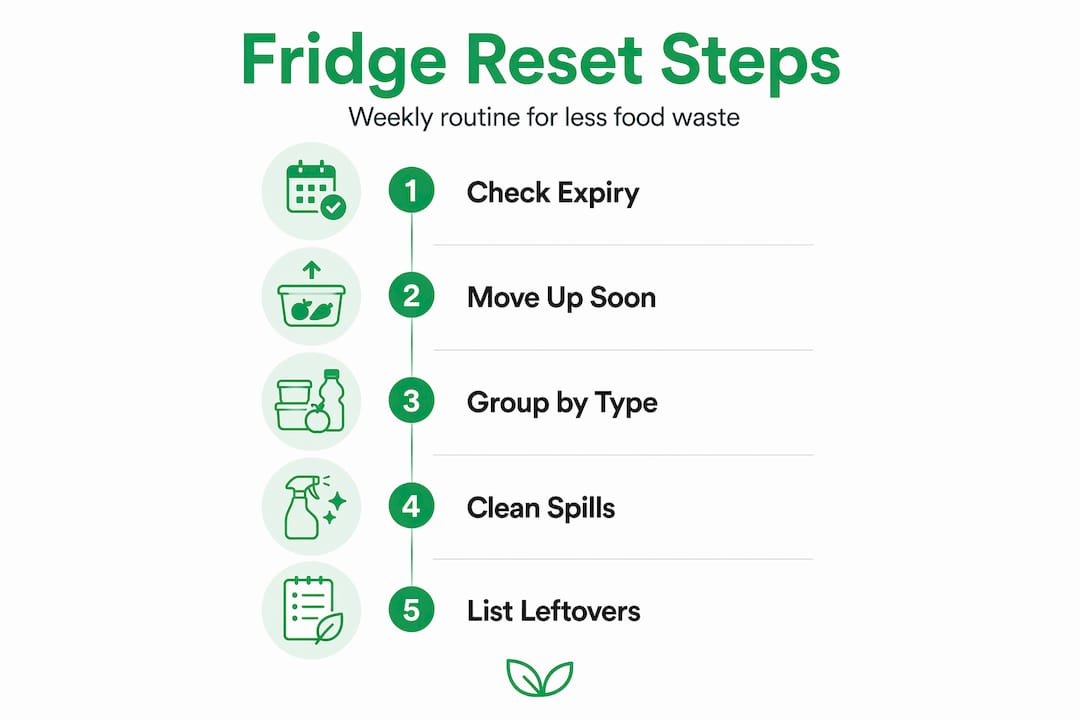
- Empty and clean. Take everything out. Discard anything expired, moldy, or unidentifiable. Wipe down every shelf and drawer with warm soapy water. This is your reset moment.
- Set up zones and bins. Place your clear bins in their designated zones. Label the bins if it helps your household remember the system.
- Restock with FIFO. As you put food back, older items go front and center. New groceries go behind them. Date-label anything without a clear expiration visible.
- Adjust humidity drawers. Slide the humidity controls to the correct settings before loading produce. High humidity on one side, low on the other.
- Run a weekly reset. A 60 to 90 minute initial reorganization followed by a 5 to 10 minute weekly reset reduces waste immediately and saves hundreds of dollars annually.
The weekly reset is the habit that makes everything else stick. Pick a consistent day, Sunday works well for most households, and spend five minutes moving expiring items to the front, updating your grocery list based on what's running low, and wiping up any spills before they become a problem.
Pro Tip: Keep a small whiteboard or sticky note on the fridge door listing items that need to be used soon. Anyone cooking that day can glance at it and incorporate those ingredients without needing to dig through the fridge.
Maintaining fridge maintenance tips like these doesn't require discipline so much as it requires making the right behavior the easiest behavior. When the system is set up correctly, doing the right thing takes less effort than ignoring it.
Benefits of organizing your fridge beyond reducing food waste
The direct impact of fridge organization on food loss is clear. But the downstream benefits are worth spelling out, because they add up to a genuinely different quality of daily life.
- Real money saved. Preventing spoilage on even a fraction of that $3,000 annual waste puts hundreds of dollars back in your pocket each year without changing your shopping habits.
- Faster meal prep. When food is grouped by category and visible at a glance, deciding what to cook takes seconds instead of minutes. You stop buying duplicates of things you already have.
- Lower energy bills. A well-spaced fridge doesn't have to work as hard to maintain temperature. The compressor runs less, and your electricity bill reflects it.
- Reduced environmental impact. Food that rots in landfills produces methane, a potent greenhouse gas. Less wasted food means a smaller carbon footprint without any lifestyle sacrifice.
- Better family habits. When kids see a system in action, they learn food responsibility naturally. It becomes normal to check what's available before asking for something new.
"Reorganizing your fridge saves food, money, energy, and supports the planet by enabling better use of fresh food and leftovers while making meal prep significantly easier."
The benefits of fridge organization extend well beyond the kitchen. For eco-conscious households especially, this is one of the most tangible, measurable actions you can take toward a lower-waste lifestyle.
A fresh take: why mindset and routine matter more than gadgets
Here's something the fridge organization content universe rarely says out loud: buying a bigger fridge is almost never the answer. Neither is a $200 set of matching containers or a custom refrigerator organizer system. The households that consistently waste the least food aren't the ones with the fanciest appliances. They're the ones with the most consistent routines.
The real shift is moving from thinking of the fridge as a storage problem to treating it as a management opportunity. As one perspective puts it, most people think they have a shopping problem when they actually have a storage problem. Effective systems and routines make daily life run more smoothly, and the fridge is the clearest example of that principle in action.
A one-time overhaul feels satisfying, but it degrades within two weeks without a weekly reset habit. The five-minute Sunday scan is worth more than the initial 90-minute deep clean, because it's the repetition that creates lasting change. Pair that habit with involving the whole household, and you've built a system that runs itself.
Inexpensive tools like masking tape, a marker, and a few clear bins from any dollar store deliver most of the value. The fridge organization routines that actually stick are the ones that are simple enough to do tired, on a weeknight, after a long day. Complexity is the enemy of consistency.
Get started today with Spoilless fridge organization solutions
Fridge organization is the physical foundation of reducing food waste, but keeping track of what you have, when it expires, and what to cook with it is where most households still struggle. That's exactly the gap Spoilless was built to close.
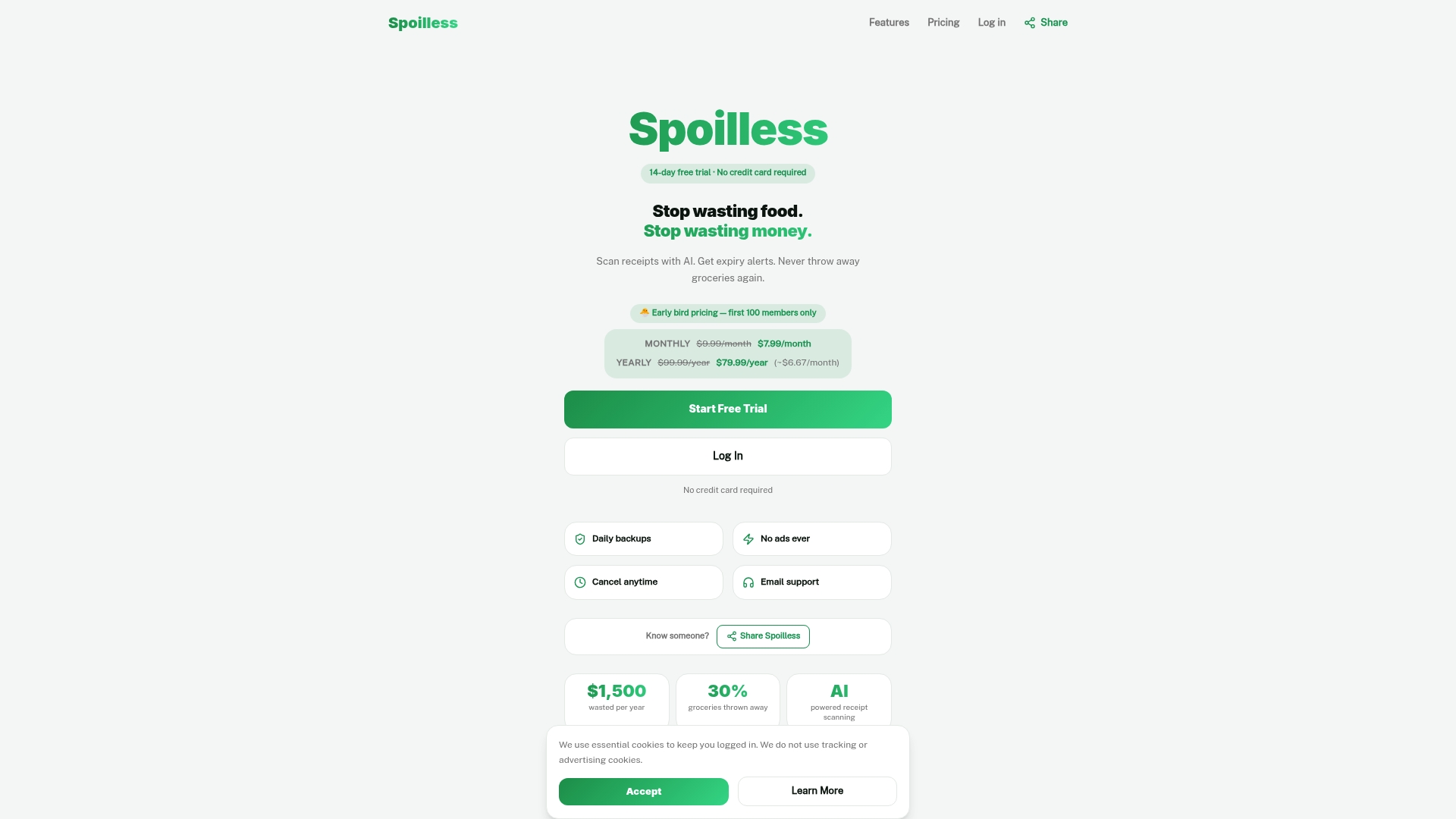
Spoilless uses AI-powered receipt scanning to automatically update your virtual pantry every time you shop, sends expiry alerts before food goes bad, and suggests recipes based on what's actually in your fridge right now. It's the fridge organization solutions from Spoilless that turn a well-arranged fridge into a genuinely smart food management system. Whether you're a busy professional trying to stop throwing money away or an eco-conscious household working toward less waste, Spoilless gives you the visibility and reminders that make good habits effortless. Start your free trial and see how much you save in the first month.
Frequently asked questions
What is the FIFO method and how does it reduce food waste?
FIFO (First In, First Out) means placing older food items at the front of your fridge so you use them before newer ones. FIFO reduces food waste by up to 40% when applied consistently across every shelf, not just one area.
Where should milk and eggs be stored in the fridge to maximize freshness?
Milk and eggs belong on the middle or back shelves, never the door. Door storage spoils milk 2 to 3 days faster because the door is the warmest, most temperature-variable zone in the fridge.
How often should I reorganize my fridge to keep food waste low?
Do a full overhaul every 3 to 4 months and a 5-minute weekly scan to rotate food and remove expired items. The weekly habit does more to prevent waste than any single deep clean.
What are the best humidity settings for crisper drawers?
Use the high-humidity drawer for wilt-prone vegetables like leafy greens and carrots, and the low-humidity drawer for fruits and rot-prone vegetables. High-humidity drawers prevent wilting while low-humidity drawers prevent rot, and the difference in produce lifespan is significant.
Why is proper fridge airflow important for reducing food spoilage?
Blocked airflow creates warm spots that spoil food faster; leaving roughly 50% space on each shelf and using clear stackable bins maintains even cooling throughout the fridge.