
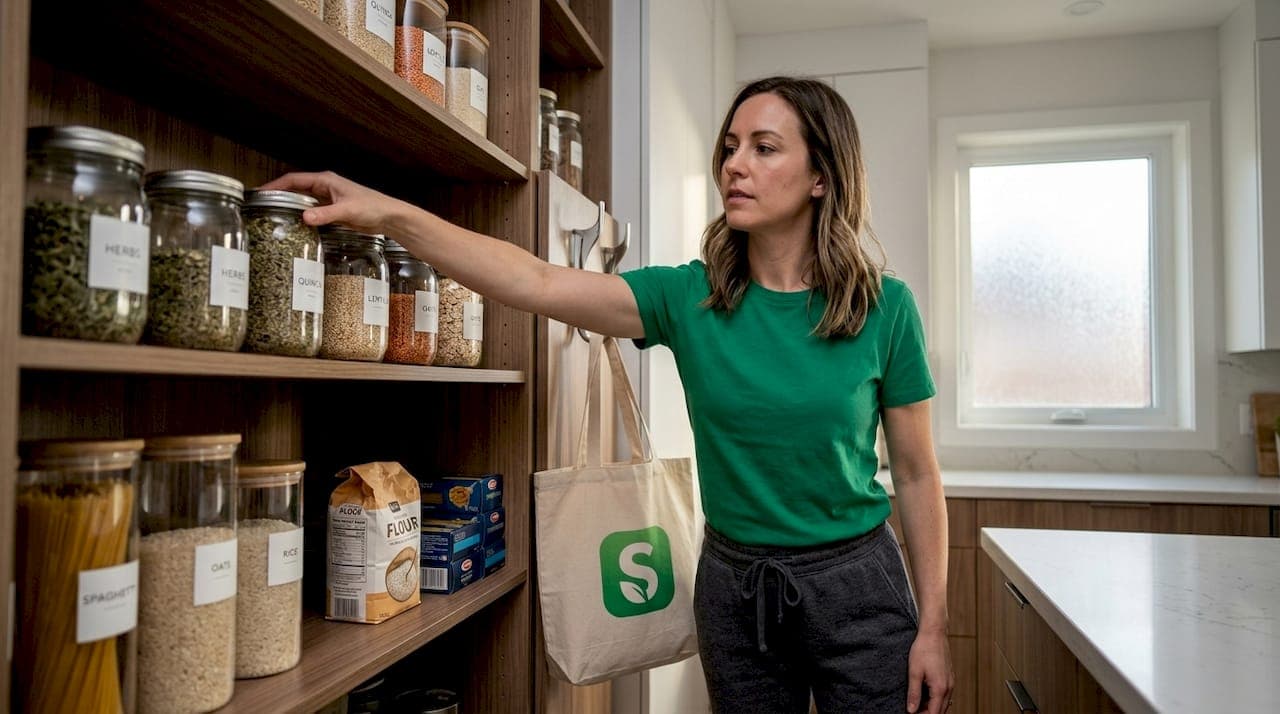
A cluttered pantry is not just an eyesore. It is a direct cause of food waste, duplicate purchases, and the kind of meal prep paralysis that makes you order takeout instead of using what you already have. The good news is that the right examples of pantry organization systems can change all of this without a full kitchen renovation or a weekend lost to reorganizing. This article walks you through practical, tested approaches, from zoning and FIFO rotation to pull-out hardware and smart storage tools, so you can spend less time hunting for ingredients and more time actually cooking.
Table of Contents
- Assessing your pantry organization needs and criteria
- Zoning your pantry with the right storage solutions
- Maximizing small and awkward pantry spaces
- First In, First Out (FIFO): an operational pantry system to reduce waste
- Adjustable shelving and pull-out solutions for accessibility
- Comparison of pantry organization system examples
- Why ongoing discipline and customization make or break pantry systems
- Get started with Spoilless for smart pantry management
- Frequently asked questions
Key Takeaways
| Point | Details |
|---|---|
| Zone your pantry | Organize your pantry into functional zones with matched storage for faster access and less clutter. |
| Use FIFO rotation | Place older items in front and new items behind to reduce waste and keep stock fresh. |
| Maximize small spaces | Utilize door racks and lazy Susans to optimize awkward or small pantry areas. |
| Customize by habit | Design zones and containers based on your cooking style and frequency of use. |
| Maintain discipline | Regularly rotate stock and keep containers orderly to ensure long-term pantry success. |
Assessing your pantry organization needs and criteria
Before buying a single bin or shelf riser, you need to understand what your pantry actually requires. The most common mistake is copying a Pinterest-perfect setup that does not match how you cook or how your household shops.
Start by asking a few honest questions. How often do you cook from scratch? Do you buy in bulk? Are there kids grabbing snacks at random hours? Your answers determine which zones matter most and which storage types will actually get used.
The core principle is straightforward: assign each product category to a dedicated zone and match the storage type to that zone so items stay visible and quick to find. A zone for canned goods needs different storage than a zone for snacks or baking supplies.
Key criteria to evaluate before you set up any system:
- Pantry size and shelf depth: Deep shelves need pull-outs or turntables; shallow shelves work well with clear bins.
- Cooking frequency and habits: Daily cooks need fast access to staples; occasional cooks can tolerate slightly less convenient setups.
- Household size: Larger households need more backup stock space and clearer labeling.
- Budget: Effective organization does not require expensive custom cabinetry. Many solutions cost under $50.
- Commitment to maintenance: A system only works if you maintain it, which we will cover in depth later.
Once you have answered these questions, you are ready to build a system that actually sticks. The foundation of any good setup involves building pantry systems around FIFO rotation, which ensures older items get used before newer ones.
Zoning your pantry with the right storage solutions
Zoning is the single most effective pantry organization idea because it removes the guesswork from cooking. Instead of scanning every shelf to find the pasta, you know exactly where to look.
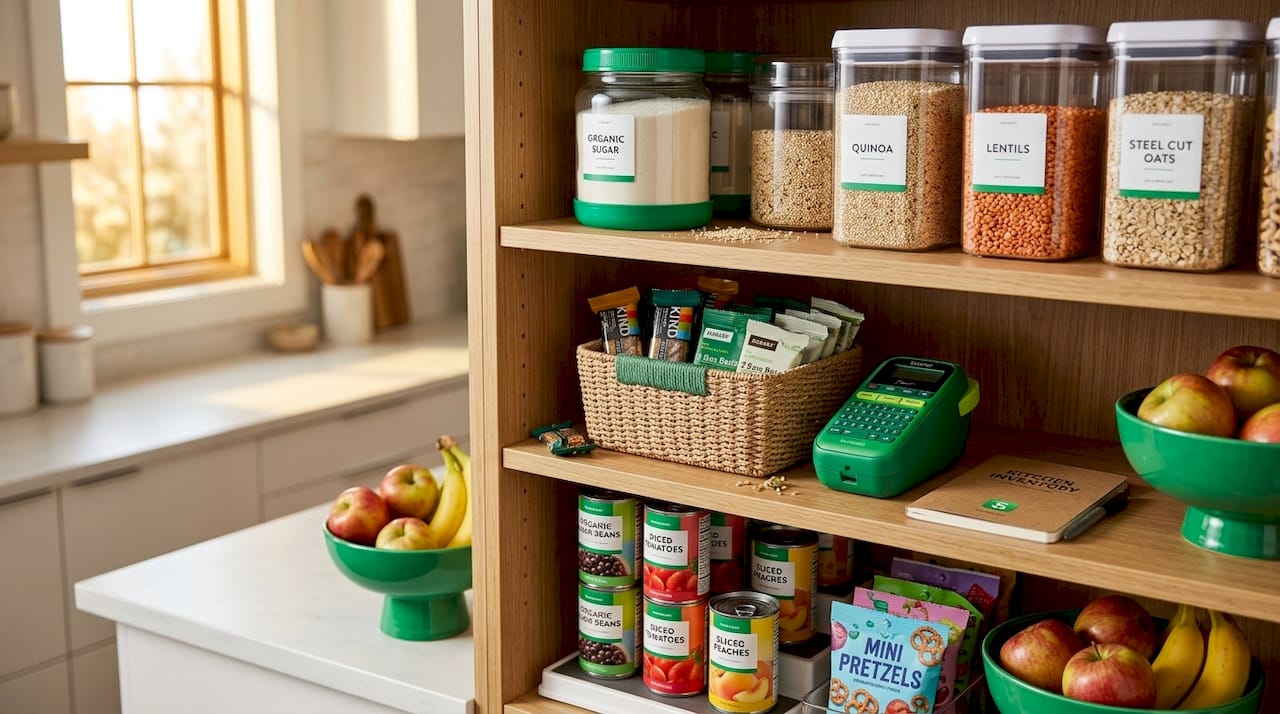
A practical 2026 approach divides the pantry into four functional zones: Daily Essentials, Canned/Heavy, Snacks/Grab-and-Go, and Backup Stock, then matches specific organizers to each zone. This is not just aesthetic. It directly reduces the time you spend in the pantry and the chances of food expiring unnoticed.
Here is how to match organizers to each zone:
- Daily Essentials (eye-level shelf): Clear airtight containers for flour, rice, oats, and pasta. Labels on the front. These get opened multiple times a week.
- Canned/Heavy goods (lower shelves): Tiered can dispensers or stepped risers so every can is visible. Stacking cans without a riser is how things get lost.
- Snacks/Grab-and-Go (accessible mid-shelf): Open bins or small baskets, ideally at a height kids can reach if needed. No lids. Friction kills habits.
- Backup Stock (top shelf or back of pantry): Grouped by category in labeled bins. This is your overflow, not your daily reach zone.
Pro Tip: Use a single consistent label format across all zones. A label maker with uniform font and size makes the system feel intentional and is easier to scan quickly. Handwritten labels on masking tape work fine too, as long as they are legible and replaced when worn.
The goal is not a magazine photo. The goal is that anyone in your household can find what they need in under 10 seconds.
Maximizing small and awkward pantry spaces
Not every home has a walk-in pantry. Many kitchens have a single narrow cabinet, a closet with one fixed shelf, or a corner space that seems impossible to use well. These constraints are solvable with the right tools.
For small or awkward pantries, door-mounted pegboards and lazy Susans are two of the highest-impact additions you can make. Pegboards on the inside of pantry doors turn dead vertical space into active storage for spice jars, small bags, and foil rolls. Lazy Susans handle deep corner shelves where items otherwise disappear.
Practical options for tight spaces:
- Over-door organizers: Clear pockets or wire racks that hold spices, condiment packets, and small cans.
- Lazy Susans (turntables): Place one on a deep shelf and you can rotate to see everything without reaching to the back.
- Stackable bins with open fronts: These let you see contents at a glance and pull items without disturbing the whole shelf.
- Tension rod dividers: Inexpensive and effective for creating vertical sections on a shelf to separate cutting boards, baking sheets, or flat items.
Pro Tip: Resist the urge to fill every inch of a small pantry. Cramming bins and containers together creates visual chaos and makes rotation nearly impossible. Leave 15 to 20 percent of each shelf empty as working space.
The best pantry storage solutions for small spaces prioritize visibility over volume. If you cannot see it, you will not use it.
First In, First Out (FIFO): an operational pantry system to reduce waste
FIFO is a stock management method used in commercial kitchens and grocery warehouses. The rule is simple: the first item to arrive is the first item used. Older stock goes to the front; newer stock goes behind it.
For home cooks, FIFO rotation prevents the "graveyard of expired goods" that accumulates at the back of shelves and supports a real-time mental inventory of what you actually have. This directly reduces food waste and saves money.
Here is how to set up a FIFO pantry system step by step:
- Map your pantry into clear zones based on food category (see the zoning section above).
- Label and date every item when it enters the pantry. A simple date written on masking tape works. Some cooks use a marker directly on the package.
- Place the oldest items at the front and new purchases behind them every single time you restock.
- Do a weekly rotation check of 5 to 10 minutes to catch anything that slipped out of order.
- Purge expired items during the check and note what keeps expiring so you can buy less of it.
FIFO is not a one-time setup. It is an ongoing workflow. The cooks who benefit most from it treat restocking as a two-step process: unload groceries, then rotate the pantry. It takes three minutes and prevents months of waste.
The discipline required is minimal once it becomes habit. The payoff, less food thrown away and faster meal planning, is immediate.
Adjustable shelving and pull-out solutions for accessibility
Fixed shelves at fixed heights are one of the biggest sources of wasted pantry space. A shelf designed for canned goods becomes useless for tall cereal boxes. Adjustable shelving solves this at a fraction of the cost of custom cabinetry.
IKEA recommends pull-out solutions and adjustable shelves for easier access, combined with drawer dividers for spices and LED lighting for visibility without renovation. These are targeted upgrades, not full remodels.
Key hardware upgrades worth considering:
- Pull-out drawers or trays: These slide out to reveal the full depth of a shelf, eliminating the "black hole" at the back of deep cabinets.
- Adjustable shelf pins: Allow you to reposition shelves as your storage needs change.
- Drawer dividers: Keep spice jars, seasoning packets, and small items from sliding around and mixing together.
- Motion-activated LED strip lights: A simple peel-and-stick addition that makes dark cabinets usable without rewiring anything.
| Upgrade | Cost range | Primary benefit | Best for |
|---|---|---|---|
| Pull-out drawer tray | $20 to $60 | Access deep shelves easily | Deep pantry cabinets |
| Adjustable shelf pins | $5 to $15 | Reconfigure shelf height | Fixed-shelf pantries |
| Drawer dividers | $10 to $25 | Organize small items | Spice and packet storage |
| LED motion light strip | $10 to $20 | Visibility in dark spaces | Enclosed pantry closets |
Pro Tip: Before buying pull-out trays, measure your shelf depth and the interior width of the cabinet. Many pull-out solutions are adjustable, but confirming measurements first saves a return trip.
Comparison of pantry organization system examples
Different pantry system examples suit different spaces, budgets, and habits. Here is a side-by-side look at four common approaches to help you decide.
| System | Key components | Best for | Pros | Cons |
|---|---|---|---|---|
| Elfa rail system | Adjustable rails, baskets, bins | Medium to large pantries | Scalable, modular, high visibility | Higher upfront cost |
| IKEA modular setup | Pull-out drawers, dividers, LED lights | Any size pantry | Affordable, widely available | Requires some assembly |
| DIY zoning with clear bins | Clear containers, can dispensers, labels | Budget-conscious cooks | Low cost, fully customizable | Labor-intensive to set up |
| Small-space solutions | Door racks, lazy Susans, tension rods | Narrow or single-cabinet pantries | Maximizes vertical space | Limited total storage volume |
No single system wins for every household. The right choice depends on your pantry dimensions, how much you are willing to spend upfront, and how much maintenance you will realistically commit to.
Why ongoing discipline and customization make or break pantry systems
Here is the uncomfortable truth most pantry organization articles skip: the products are not the problem. The workflow is.
You can install the most expensive Elfa system, buy matching airtight containers, and print beautiful labels. If you do not rotate stock consistently, you will still find expired cans at the back of the shelf six months later. Most pantry systems fail when they rely on "set it and forget it" placement. The practitioners who actually reduce food waste treat FIFO as an ongoing workflow, not a one-time project.
The second failure point is copying someone else's zone structure. A baker needs a prominent baking zone at eye level. A family that eats a lot of canned goods needs a tiered can system front and center. A household with teenagers needs a grab-and-go zone that is genuinely easy to access. Generic systems ignore these differences.
The cooks who get the most out of their pantry setups are the ones who revisit their zones every few months and adjust. Did the snack bin get ignored? Move it. Did the backup stock zone overflow into daily essentials? Add a bin. The system should serve your habits, not the other way around.
Building pantry systems around FIFO rotation is the operational backbone. But the structure around it needs to reflect how you actually cook, shop, and retrieve ingredients. That customization is what separates a pantry that works from one that looks good in photos but falls apart by week three.
Get started with Spoilless for smart pantry management
You now have a clear picture of how to organize a pantry that actually reduces waste and speeds up meal planning. The harder part is maintaining that system over time, especially when life gets busy and restocking happens fast.
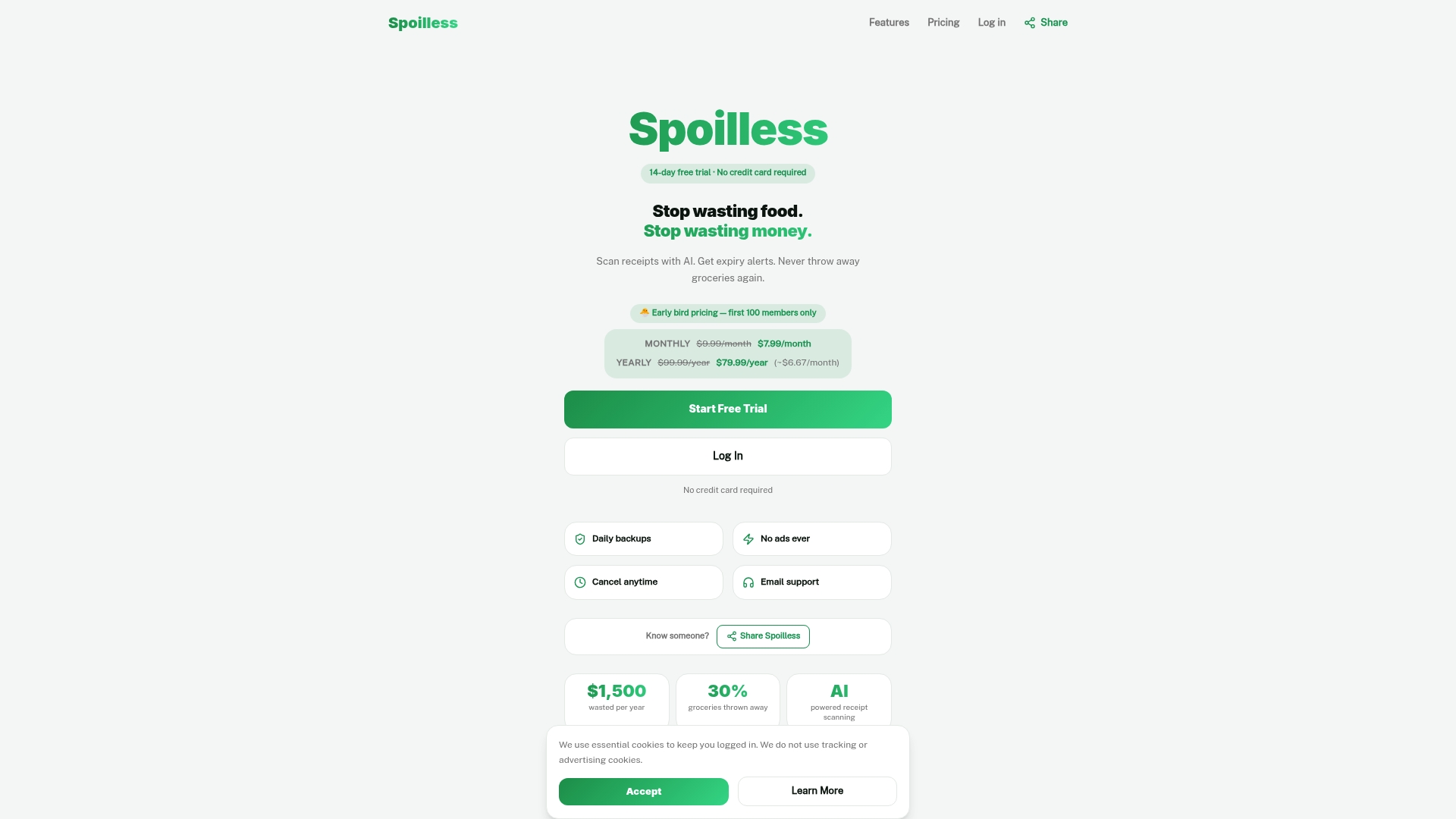
Spoilless is built for exactly this challenge. It uses AI-powered receipt scanning to automatically update your virtual pantry inventory every time you shop, so you always know what you have and what is about to expire. Expiry alerts notify you before food goes bad, and recipe suggestions help you use ingredients nearing their expiration date. Whether you are running a zoned pantry with FIFO rotation or just getting started, Spoilless keeps the operational side of pantry management running without the manual effort.
Frequently asked questions
What is the best pantry organization system for busy home cooks?
Systems that combine zoning by food category with clear labeling, appropriate storage containers, and FIFO rotation work best. Assigning each category to a dedicated zone keeps items visible and retrieval fast, which directly supports efficient meal planning.
How can FIFO help reduce food waste in my pantry?
FIFO ensures you use older items first by placing them at the front and newer purchases behind them. This prevents expired goods from accumulating unnoticed and keeps your mental inventory accurate without extra effort.
What storage solutions work best for small or awkward pantries?
Door-mounted pegboards and lazy Susans are two of the most effective tools for tight spaces. Professional organizers recommend these specifically for handling tricky layouts and freeing up shelf space without adding square footage.
Can I organize my pantry without a full renovation?
Absolutely. Targeted upgrades like drawer dividers, pull-out trays, adjustable shelves, and LED lighting improve accessibility and visibility significantly without touching a single wall or cabinet door.